


Beneficial Ownership Disclosure in Indonesia Close the Loops for Advancing Governance
Panama Papers which revealed the hidden wealth of global leaders and politicians, including 1,038 of Indonesian taxpayer, shows that corporations are prone to…
Portrait of Oil and Gas and Mining in East Java Province
National extractive resources, particularly the oil and gas and mineral and coal mining sectors, are still the primary sector contributing to state revenue (APBN), where 25 to 30%…
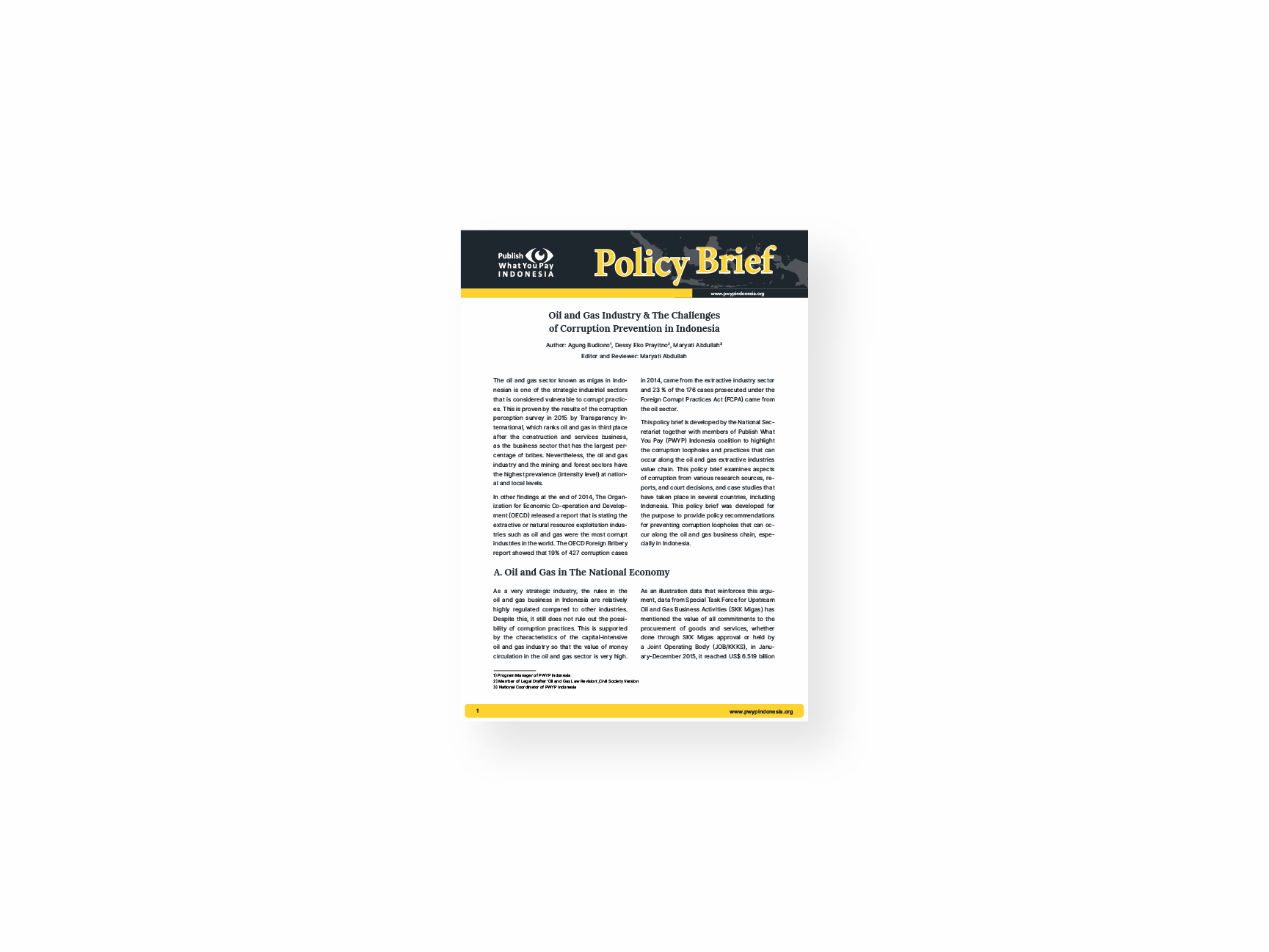
Oil and Gas Industry & The Challenges of Corruption Prevention in Indonesia
The oil and gas sector known as migas in Indonesian is one of the strategic industrial sectors that is considered vulnerable to corrupt practices. This is proven…
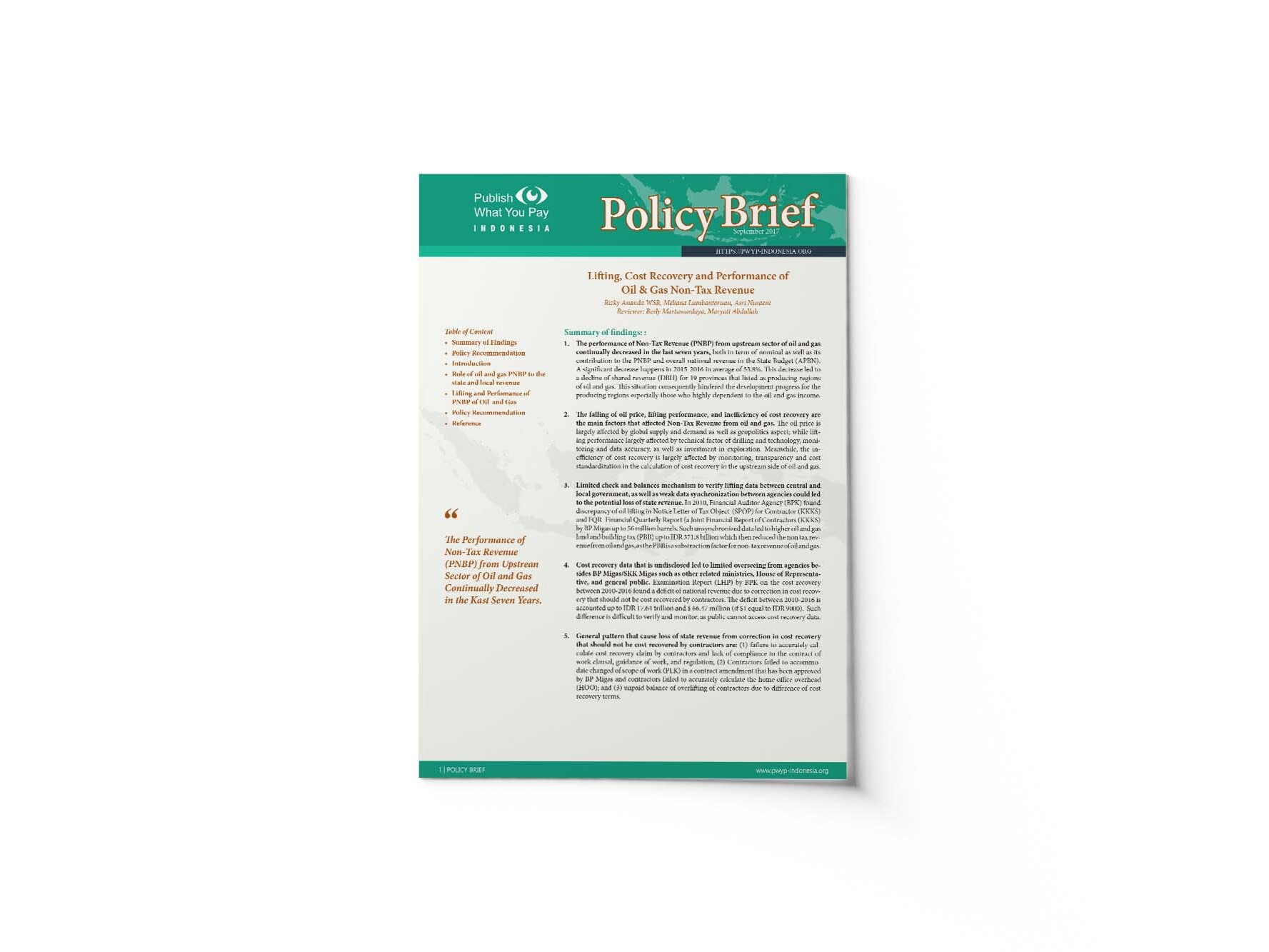
Policy Brief: Lifting, Cost Recovery and Performance of Oil & Gas Non-Tax-Revenue
Performance of oil and gas, especially non-tax revenue from upstream sector showed a decreasing trend in the last 7 years (2010-2016), both in nominal and its…
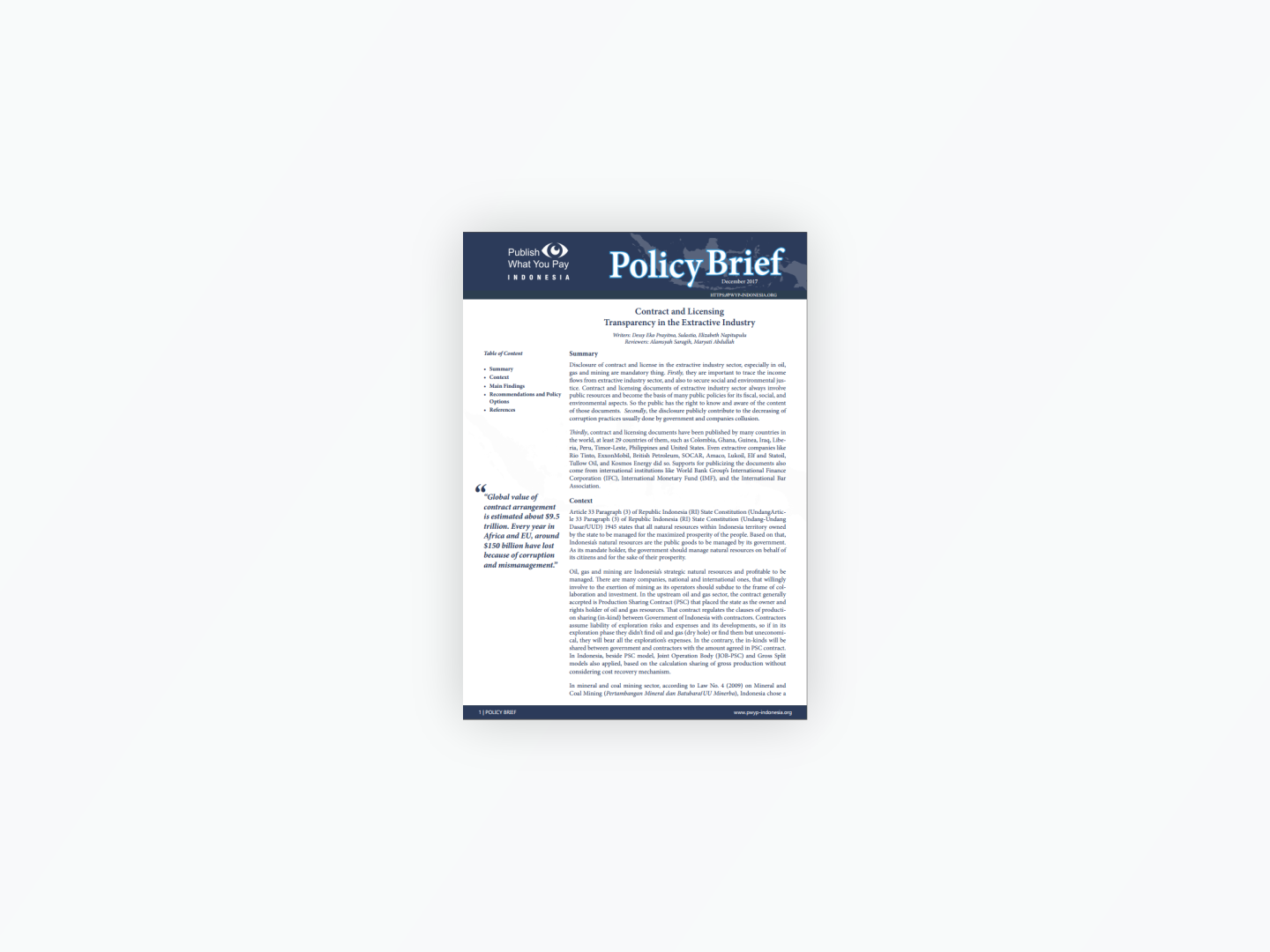
Policy Brief: Contract and Licensing Transparency in the Extractive Industry
Disclosure of contract and license in the extractive industry sector, especially in oil, gas and mining are mandatory thing. Firstly, they are important to trace the income flws…
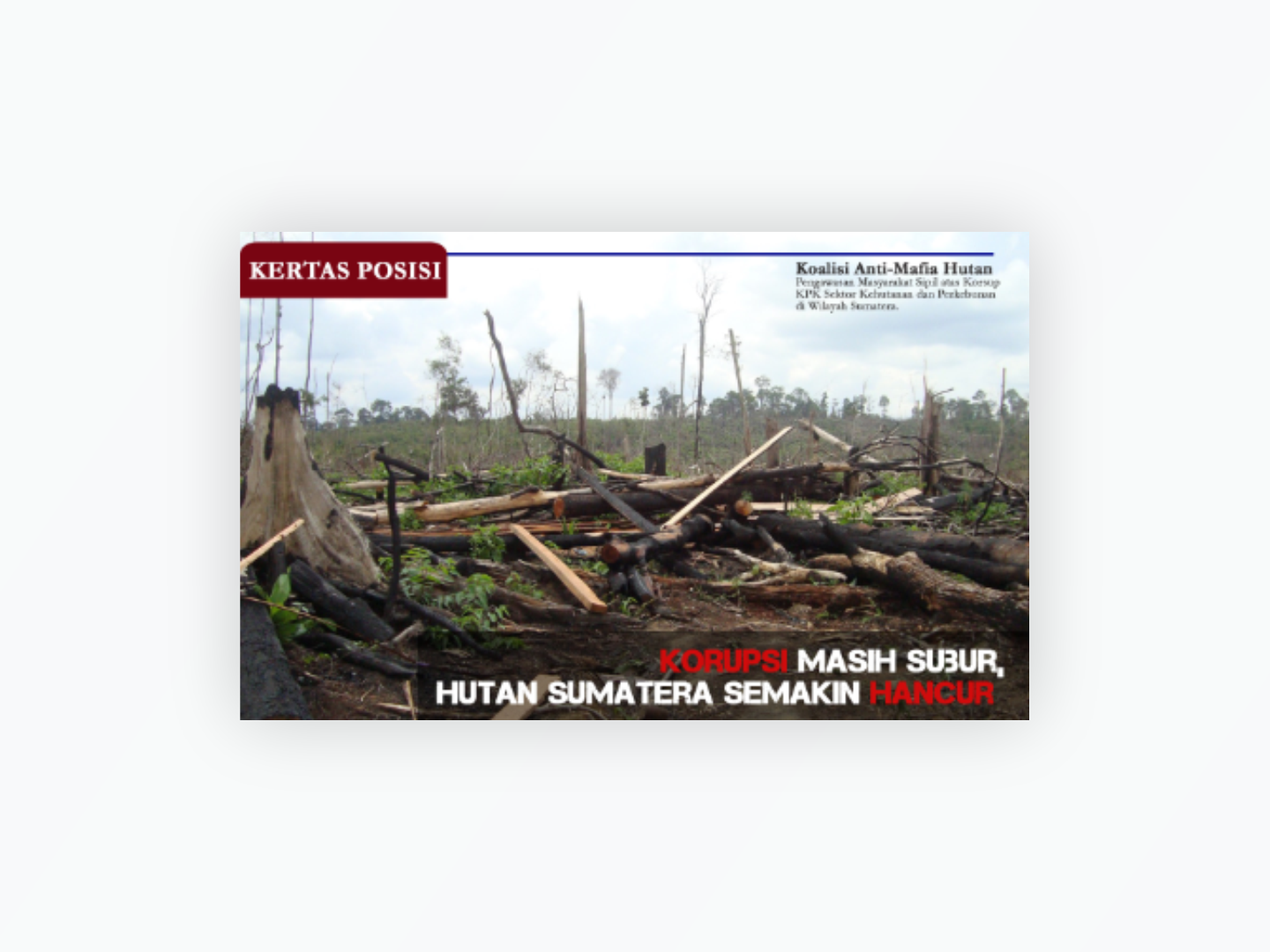
Position Paper: Corruption Still Fertile, Sumatra’s Forests Are More Destroyed
The Indonesian government's commitment to eradicate corruption is contained in Inpres No. 7/2015 and Presidential Instruction no. 10/2016 concerning Actions to Prevent and…
Policy Brief: Time for ‘Kerja Nyata’ on Saving the Natural Resources!
The Indonesian government's commitment to eradicate corruption is contained in Inpres No. 7/2015 and Presidential Instruction no. 10/2016 concerning Actions to Prevent and…
Reversing the Resource Curse Indonesia
Publish What You Pay Indonesia (PWYP Indonesia) with the support of the Ford Foundation initiated the Reversing the Resource Curse program. The program focuses on increasing the…
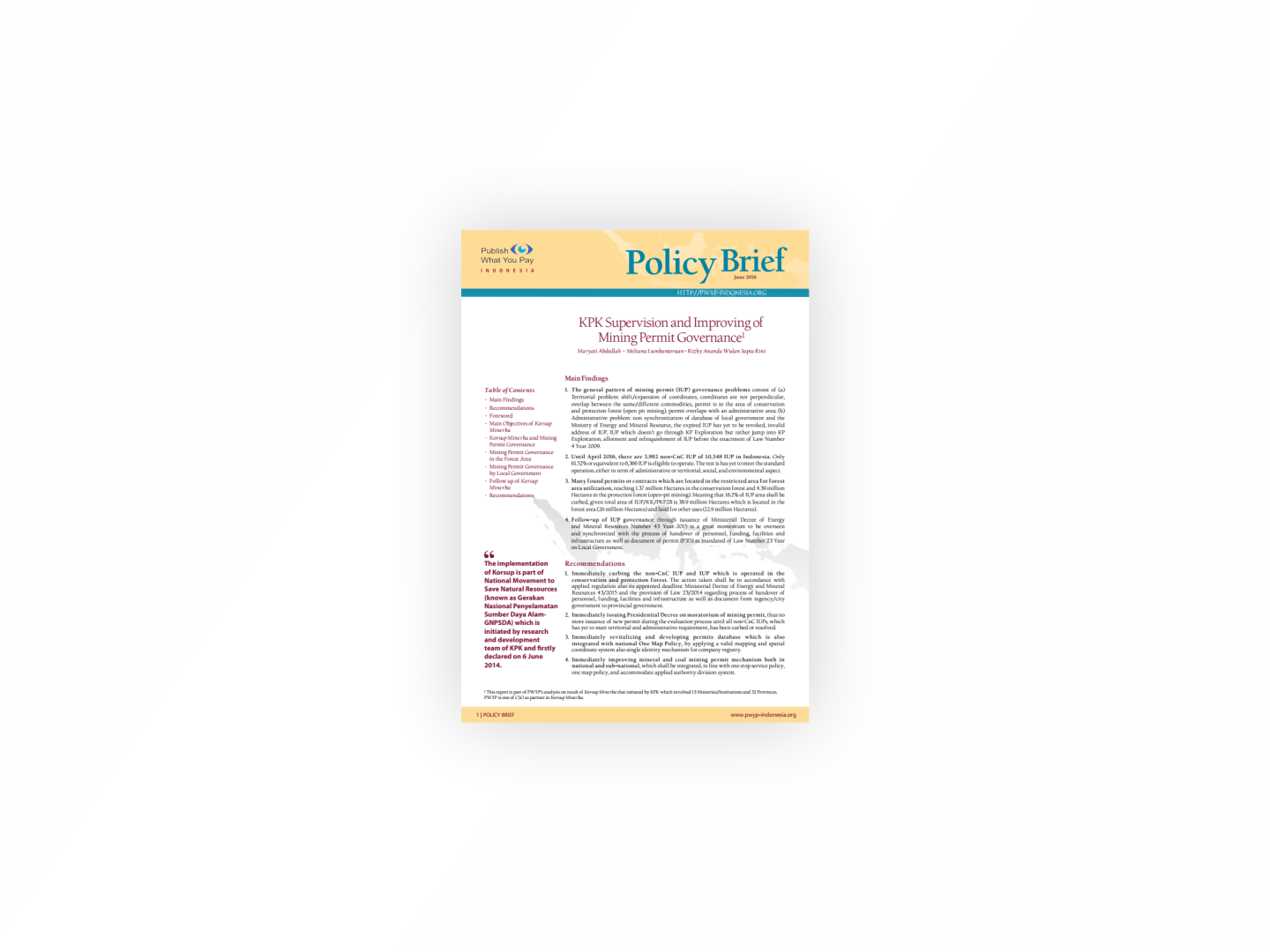
Policy Brief: Coordination and Supervision (Korsup) KPK and Mineral & Coal Mining Permit Governance
This brief capture how Coordination and Supervision of Corruption Eradication Commission (KPK) running since 2014. At the first time, National Movement on Saving the Natural…
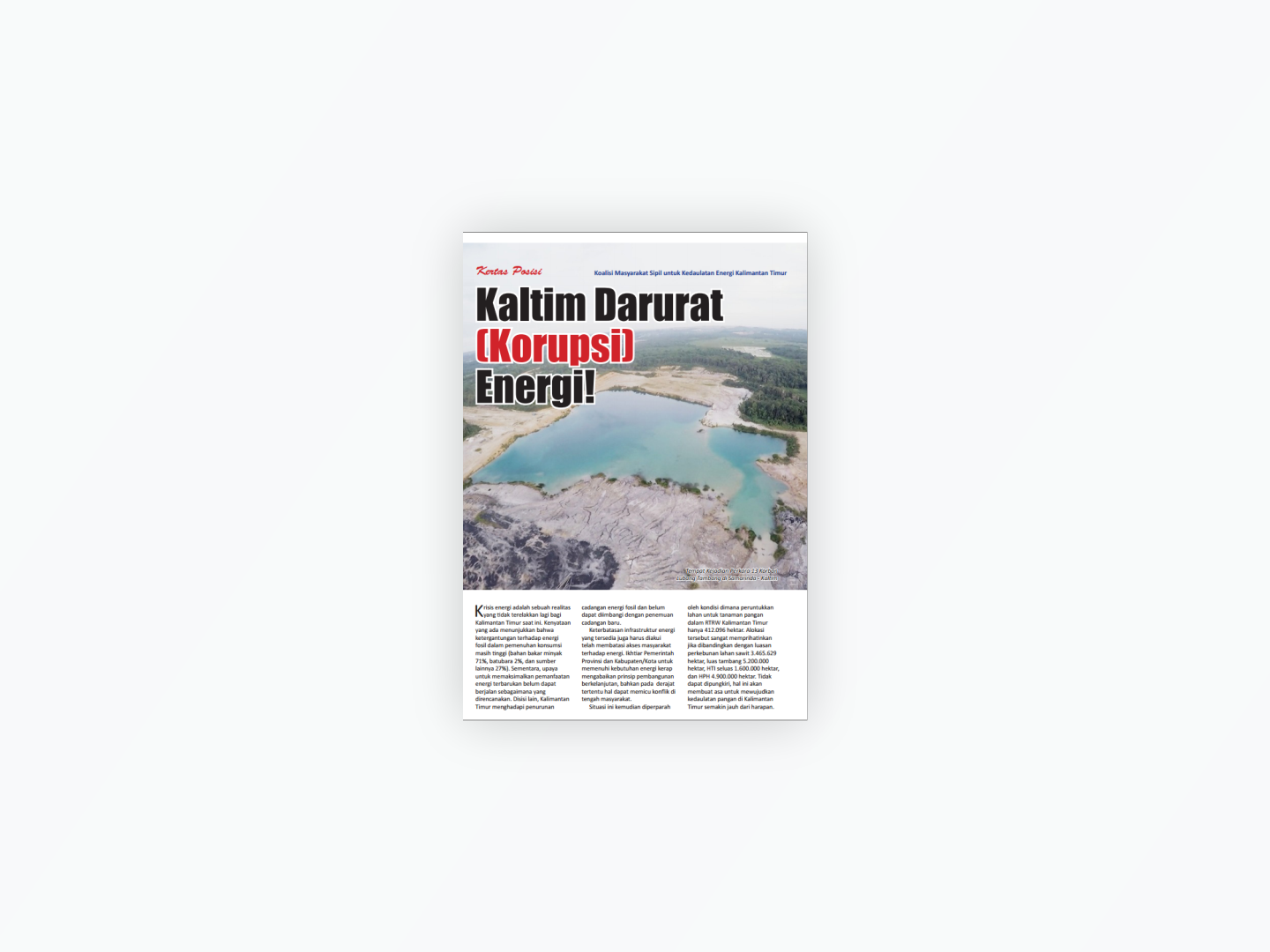
Energy Corruption Emergency in East Kalimantan
At present, the energy crisis in East Kalimantan is inevitable. The level of dependence on fossil energy is still high (71% fuel oil, coal 2%, and other sources 27%). Meanwhile,…